
King Tutankhamun’s Tomb
Suppose you’ve ever dreamed of stepping into the heart of ancient Egypt. In that case, there’s no story more captivating than that of King Tutankhamun, the boy pharaoh whose tomb remains one of the greatest archaeological discoveries of all time. Hidden in the Valley of the Kings in Luxor, his tomb was uncovered in 1922 by British archaeologist Howard Carter, capturing the imagination of the entire world. For the first time, a royal tomb was found almost completely intact, revealing treasures, artifacts, and secrets that tell the story of a young ruler who lived more than 3,000 years ago.
Exploring Tutankhamun’s tomb today — either in Luxor or through the magnificent galleries of the Grand Egyptian Museum (GEM) in Giza — allows you to connect with Egypt’s rich history like never before.
The Discovery That Changed History
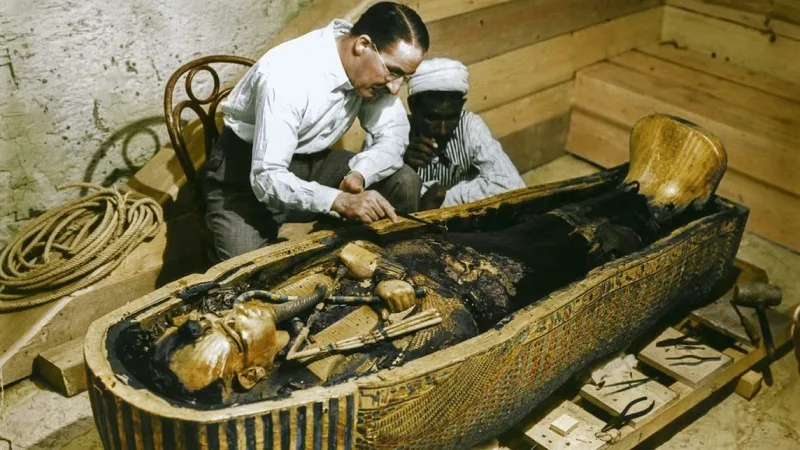
For centuries, the sands of Luxor concealed the resting place of Tutankhamun. When Carter finally peered through the tomb’s sealed doorway, he was greeted by a world frozen in time. Over 5,000 objects were discovered, including golden statues, ceremonial chariots, delicate jewelry, musical instruments, weapons, and everyday items intended to accompany the young king into the afterlife.
The find was remarkable not only for its quantity but also for its quality. Every item, from the intricately crafted funerary mask to the painted walls of the burial chambers, offered an intimate glimpse into the life, death, and beliefs of ancient Egypt. Unlike other tombs that had been looted over the centuries, Tutankhamun’s resting place was largely untouched, making it a priceless historical treasure and a true time capsule of an ancient civilization.
The discovery also revolutionized our understanding of ancient Egyptian craftsmanship, culture, and religion. It provided evidence of the ceremonial importance of gold, the artistry of royal furnishings, and the symbolic representations of eternal life that were central to Egyptian belief systems.
From Luxor to Cairo: A Historic Journey
For decades, Tutankhamun’s treasures were displayed at the Egyptian Museum in Cairo’s Tahrir Square, giving visitors a chance to see Egypt’s most famous artifacts. However, with the construction of a world-class museum near the Giza Pyramids, the Egyptian government undertook the careful relocation of Tutankhamun’s entire collection to the Grand Egyptian Museum (GEM).
The transfer was an extraordinary effort. Each object was carefully cleaned, restored, and packed using the latest technology to ensure that delicate artifacts survived the move. Now, after the official grand opening of the GEM on November 1, visitors can see the complete Tutankhamun collection of over 5,000 artifacts displayed together for the first time since their discovery in 1922.
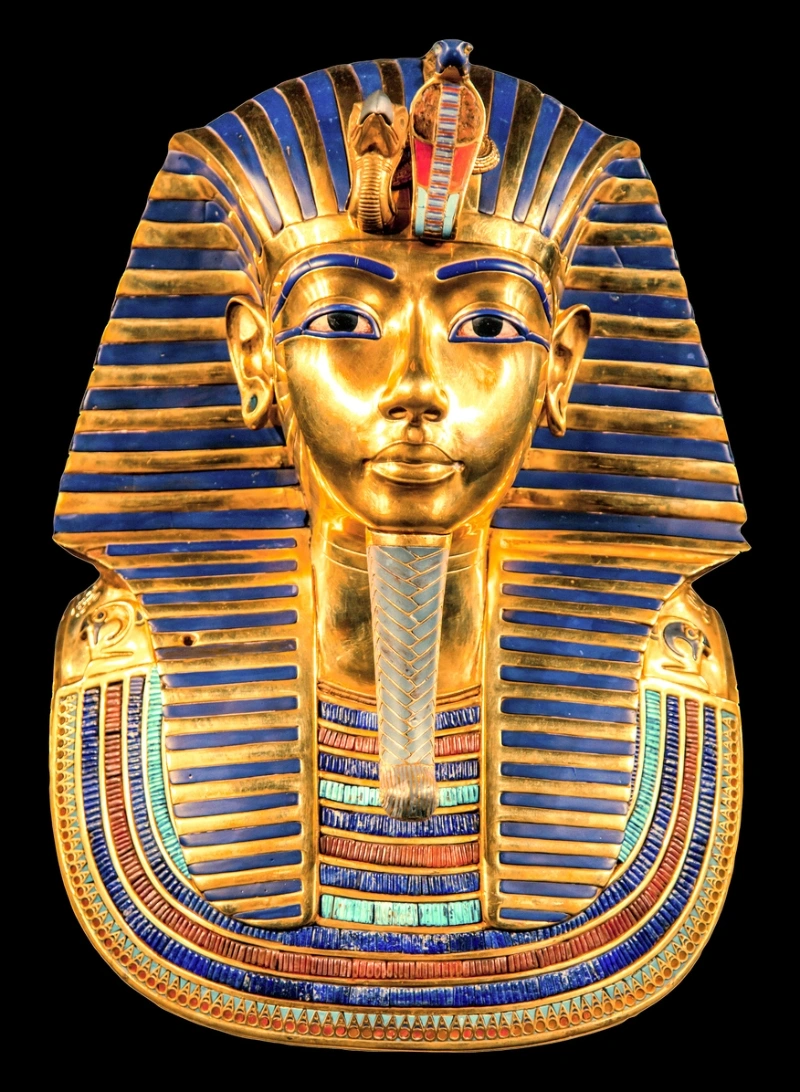
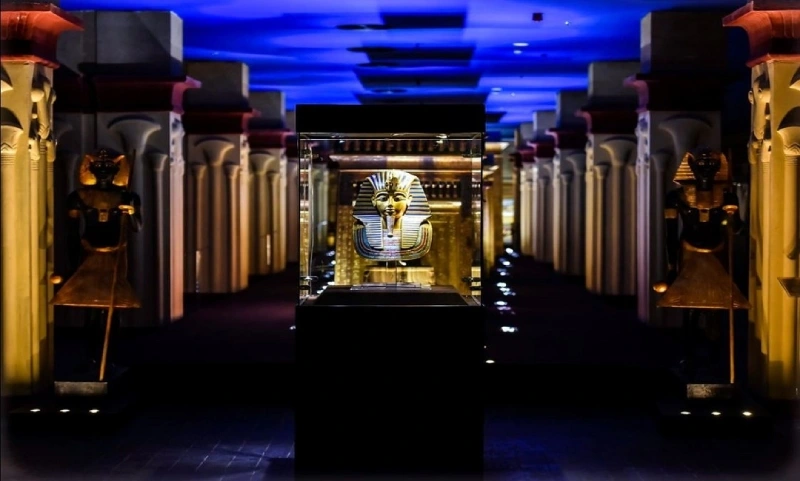
At the GEM, the galleries are designed to recreate the layout of the original tomb: the Antechamber, Annex, Treasury, and Burial Chamber. Walking through these halls allows you to experience the sense of awe that Howard Carter must have felt over a century ago. The golden funerary mask, gleaming under soft museum lighting, remains the centerpiece, a timeless symbol of ancient Egyptian artistry and devotion to the afterlife.
Beyond the treasures themselves, the GEM offers interactive displays, digital reconstructions, and immersive storytelling that help you understand the historical context, the life of Tutankhamun, and the cultural significance of each artifact. The museum’s location, just minutes from the Pyramids of Giza, also allows you to combine visits to the tomb of the boy king and the Great Pyramids in a single day, making it one of the most convenient and unforgettable experiences in Egypt.
What Remains in Luxor
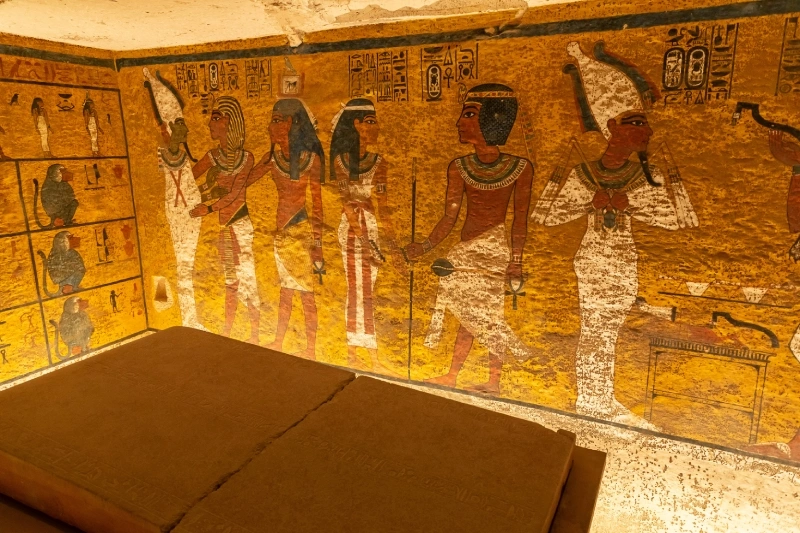
Even though most treasures have been relocated, Luxor remains at the heart of Tutankhamun’s story. The original Tomb of Tutankhamun (KV62) in the Valley of the Kings is open to visitors. Here, you can descend the narrow staircases into the chambers where the pharaoh was buried and witness the vivid wall paintings illustrating his journey to the afterlife.
The tomb is compact compared to other royal tombs in the valley, but its historical significance is enormous. Walking through it allows you to connect personally with history, and seeing the mummy of Tutankhamun in a climate-controlled glass case is a deeply moving experience. Visiting the tomb early in the morning is recommended to avoid crowds and enjoy a quiet, almost spiritual atmosphere.
Exploring Luxor also gives you the chance to see other nearby historical sites, including the Temple of Hatshepsut, Karnak Temple, and Luxor Temple, enriching your understanding of ancient Egyptian civilization. Many travelers combine their Luxor visit with a Nile River cruise, which offers a scenic and relaxing way to travel from Luxor to Cairo, following the same river that pharaohs once sailed.

Tutankhamun Collection at the Grand Egyptian Museum
The Grand Egyptian Museum (GEM) in Giza now houses the complete collection of artifacts from King Tutankhamun’s tomb. For the first time since their discovery in 1922, over 5,000 objects are displayed together, providing a comprehensive view of the life and burial of the young pharaoh. The exhibition is organized to reflect the layout of the original tomb, including the Antechamber, Annex, Treasury, and Burial Chamber. Key highlights include the golden funerary mask, royal thrones, ceremonial chariots, canopic coffinettes, and the nested coffins. Modern climate control and lighting ensure preservation and optimal viewing, while interactive panels and detailed labels provide historical context, explaining the significance and craftsmanship of each artifact. The GEM allows visitors to understand the full scope of Tutankhamun’s treasures in a world-class museum setting.
The Legacy That Still Lives On
Thousands of years after his death, King Tutankhamun remains a global icon. His tomb may have been sealed in silence for centuries, but the treasures discovered inside continue to inspire awe. Every artifact — from gold jewelry to painted murals — reflects the Egyptians’ devotion to life after death and their extraordinary craftsmanship.
When you step inside the tomb in Luxor or wander through the galleries of the Grand Egyptian Museum, you’re not just observing history — you’re experiencing the enduring spirit of a civilization that has fascinated the world for millennia.

Walk through King Tutankhamun’s Tomb in Luxor and admire treasures at the GEM with Cairo NileCruise. Explore Egypt’s ancient history, understand burial rituals, and plan your adventure with exclusive Egypt travel packages and unforgettable Nile River cruises.
FAQs :
1- Where is King Tutankhamun’s tomb located?
King Tutankhamun’s tomb (KV62) is located in the Valley of the Kings, Luxor, Egypt, one of the most famous archaeological sites in the world.
2- Can visitors explore Tutankhamun’s tomb in Luxor?
Yes! The tomb is open to the public, and you can walk through the chambers where the young pharaoh was buried, including seeing his mummy in a protective case.
3- Where can I see Tutankhamun’s treasures today?
Most of Tutankhamun’s treasures, including the golden funerary mask, are now displayed at the Grand Egyptian Museum (GEM) near the Pyramids of Giza.
4- How do I get from Luxor to the Grand Egyptian Museum?
Traveling from Luxor to the GEM is easy via flight, private transfer, or Nile River cruises, many of which combine both Luxor and Cairo stops.
5- When was the Grand Egyptian Museum officially opened?
The GEM officially opened on November 1, allowing visitors to see the entire Tutankhamun collection together for the first time.
6- What is included in Tutankhamun’s collection at the GEM?
The collection includes over 5,000 artifacts, including the golden funerary mask, royal throne, ceremonial chariots, jewelry, statues, nested coffins, and more, displayed in galleries designed to mirror the original tomb layout.
7- Can I combine a visit to Luxor and the GEM in one trip?
Absolutely! Many travelers explore Luxor’s Valley of the Kings, then continue to Cairo and the GEM via Nile River cruises or Egypt travel packages.
8- What is the best time of year to visit Tutankhamun sites in Egypt?
The optimal months are November to February, when weather is mild and comfortable for touring both Luxor and Cairo.
9- Are there guided tours available for Tutankhamun’s tomb and the GEM?
Yes! Guided tours are highly recommended to provide historical context, highlight hidden details, and explain ancient Egyptian rituals and craftsmanship.
10- Are photography and video allowed inside the tomb and the GEM?
Photography rules vary: in Luxor’s tomb, check with your guide first. At the GEM, photography is allowed without flash, so you can safely capture Tutankhamun’s treasures.
Happy Travellers with Cairo Nile Cruise!
Take a look at our top Egypt Tours reviews, where you will find firsthand insights from our very own Intrepid travellers.